

In 2026, i. s, Válvulas asero inoxidable xi vuelto jar centro nt'ot'e ne ar xi convertido ja 'nar opción xi buscada da ya compradores gi 'bu̲hu̲ ansiosos da uni .
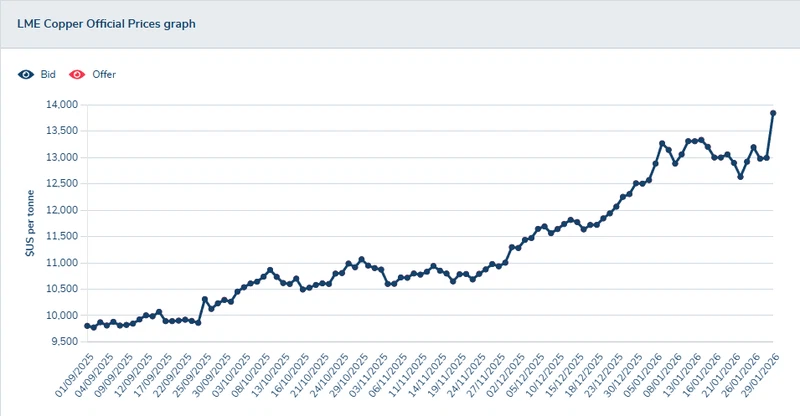
Ar 2026 Cambio ar económico: Yogo'ä ya precios latón se dispararon
Nxoge décadas, latón bí he̲'mi dominante pa válvulas tamaño pequeño. Bí hei ar mecanizar ne relativamente barato. 'Ñotho ar embargo, Ar gu̲ki makwäni nu'bya ar 2026 xi cambiado Nunu̲ escenario. Precios cobre xi subido nu'bu máximos récord ar $12,500 ya tonelada métrica, Aumento ar costo latón—'nar aleación cobre-zinc—junto con nä'ä.
Ar creciente demanda ya nts'edi computación IA ne ar aumento resultante jar consumo ñot'i xi impulsado pa ndi mañä ar demanda cobre, causando yá precios bí disparen. Aumento aún mi mäs ya nt'ot'e capital especulativa, this has fuelled a further sharp rise in copper prices. Ar LME copper price increase has exceeded 30% within four months
When you factor in the stringent “Hinda plomo” regulations for potable water, which require expensive bismuth-based brass alloys, the price of copper has far exceeded that of stainless steel materials; the price gap between brass valves and stainless steel valves has almost entirely evaporated. Nu'bya, choosing a 1” stainless steel ball valve over a lead-free brass equivalent often costs within a 10-15% margin, while offering triple the service life.
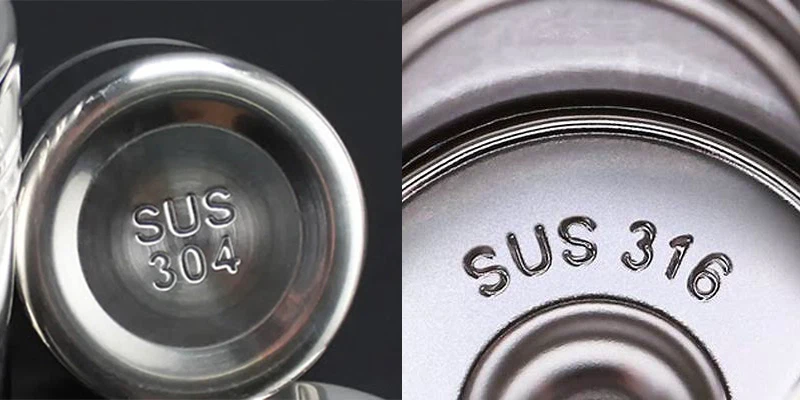
Materiales: Ar 304 vs. 316 Debate
When we talk about stainless steel valves in this size bracket, we are almost always talking about two specific grades:
- Grade 304 Asero inoxidable
This is the “estándar” grade. It contains chromium and nickel, providing excellent resistance to oxidation and rust. It is the go-to for residential water systems, compressed air, and non-corrosive industrial liquids.
- Pros: rentable, strong, and hygienic.
- Cons: Vulnerable to chlorides (saltwater) and highly acidic environments.
- Grade 316 Asero inoxidable
Ar “professional” grade. It includes 2-3% Molybdenum, which acts like a shield against pitting and crevice corrosion.
- Pros: Superior for marine environments, procesamiento químico, and pharmaceutical lines.
- Cons: Approximately 20-30% more expensive than 304.
Core Types of Small-Sized Barbulas asero inoxidable
In the 1/2” to 2” category, the design usually dictates the performance. Here are the most common configurations you’ll encounter:
Stainless Steel Ball Valves
Ball valves are the gold standard for shut-off. They use a rotating hollow ball to control flow.
- 1-Piece: Reduced port (smaller internal hole), non-repairable, but very inexpensive.
- 2-Piece: The industry standard. Full port (the hole matches the pipe size), providing zero flow restriction.
- 3-Piece: The maintenance dream. The center section can be swung out for seal replacement without removing the ends from the pipe.
Gate and Globe Valves
While ball valves are for “on/off” control, Válvulas 'be̲t'o are designed for adjusting the flow rate. Válvulas compuerta are traditional shut-offs used in high-pressure steam or oil systems where a slow opening is required to prevent “water hammer.”
Válvulas retención
These are the “one-way streets” of the piping world. In sizes like 1/2” to 2”, you’ll mostly see Swing Check or Spring-Loaded Y-Check valves. They prevent backflow, protecting pumps and upstream equipment.
Características técnicas ne estructura
- Seal Materials: Almost all modern stainless valves in this size range use PTFE (Teflon) or R-PTFE (reinforced Teflon) Asientos. This allows them to operate in temperatures from -20°C to 180°C (-4°F to 356°F).
- Pressure Ratings: A standard 1” stainless steel ball valve is usually rated for 1000 PSI (WOG). Compare this to a standard brass valve, which often tops out at 400-600 PSI.
Análisis comparativo: Inoxidable vs. Brass vs. Plástico
To understand why stainless steel valves are dominating, we have to look at the alternatives.
| Característica | Asero inoxidable (304/316) | Latón (Lead-Free) | Plástico (PVC/CPVC) |
| Resistencia ar corrosión | Excelente | Moderado | Excelente (Chemicals) |
| Temp Range | Very High (up to 200°C+) | Moderado (up to 120°C) | Xí hñets'i (max 60°C) |
| Strength/Pressure | Very High (1000+ PSI) | Moderado (400-600 PSI) | Xí hñets'i (150-200 PSI) |
| Durabilidad | 30+ Years | 10-15 Years | 5-10 Years (Brittle) |
| 2026 Price Trend | Stable/Competitive | Mextha (Copper-linked) | Lowest |
| Best Use | Heavy Industrial/Food/Steam | General Plumbing | Irrigation/Pools |
Inoxidable vs. Latón
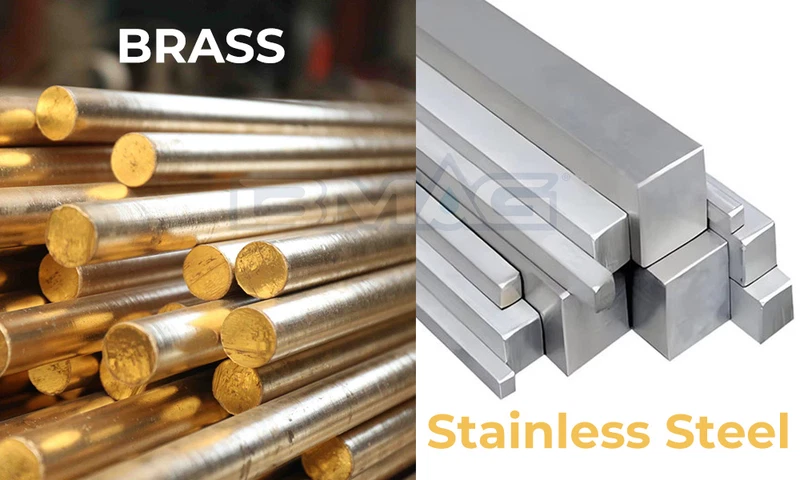
Brass is “soft.” Over time, the threads can gall, and the body can suffer from dezincification. Stainless steel is essentially immune to this. While brass is easier to thread, the 2026 price surge has neutralized its primary advantage: Low processing cost.
Inoxidable vs. Plástico
Plastic is cheap and immune to many acids. 'Ñotho ar embargo, válvulas plástico are the “fragile” members of the family. They generally cannot handle steam, high pressure, or physical impact. Modified nylon material has significantly enhanced the physical properties of plastic valves, enabling them to achieve a pressure rating of PN20. 'Ñotho ar embargo, it still cannot completely replace metal valves
Aplicaciones: Ho sobresalen ya válvulas asero inoxidable
- Food & Beverage: Because stainless steel is non-porous and “clean,” it is the only choice for brewing, dairy, and food processing. It doesn’t leach metallic flavors into the product.
- Chemical & Pharma: Handling aggressive solvents or ultrapure water requires the inert nature of 316L stainless.
- Xí nzi: Saltwater eats brass and aluminum. 316 stainless is the minimum requirement for shipboard plumbing.
- Residential High-End: More homeowners are requesting 1/2” and 3/4” stainless valves for their main water shut-offs to avoid the lead concerns of older brass alloys.
Ya nt'a̲ni frecuentes (FAQ)
Q: Ar tsa̲ da mezclar válvulas inoxidables ko tuberías cobre?
'Nar: Hä, pe da cauteloso ar corrosión galvánica. jar mbo jar ximha̲i húmedo, contacto directo entre asero inoxidable ne cobre to causar ar corroer ar cobre. Utilice 'nar mfats'i dieléctrica wa 'nar sellador mextha hño ja ya roscas pa da t'ot'e 'nar barrera.
Q: Ar asero inoxidable mäs hñei ar instalar da latón?
'Nar: Ligeramente. Hilos asero inoxidable ya xingu mäs duros. Nu'bu̲ hingi gi japu̲'be̲fi 'nar sellador rosca mextha ar hño (komongu ar cinta PTFE wa droga tubería especializada), ya hilos to “gall” (cerrar ga̲tho da t'ets'i). nzäm'bu̲ utilizar 'nar sellador basado jar lubricante.
Q: Yogo'ä ma my “inoxidable” barbula pe̲ts'i 'nar pequeño tu̲itho ar óxido ja ar exterior?
'Nar: esto es nu'bu̲ da nthe̲hu̲ 'ra “tinción ar té” wa ar contaminación superficial partículas hierro jar ndähi wa ya bo̲jä nu'u̲ utilizadas Nxoge ar instalación. Rara ora ar estructural. A quick wipe with a mild citric acid cleaner usually fixes it.
Q: Ya ga̲tho ya válvulas asero inoxidable hinda plomo?
'Nar: Hä. Ma diferencia latón, da tso̲kwa menudo gi japu̲'be̲fi plomo pa gi ar metal mäs hei ar máquina, aleaciones asero inoxidable ya naturalmente hinda plomo, o̲t'e ya inherentemente mäs seguros pa ar dehe potable.


