What Should a Valve RFQ Include?
A useful valve request for quotation (RFQ) tells the supplier where the valve will be used, what it must connect to, and which documents the project requires. Start with the application and destination market. Then specify the valve function, size, connections on both ends, materials, fluid, operating conditions, required approvals, quantity and delivery location.
If you do not know a technical value, write “to be confirmed” and attach any available drawing or project specification. Guessing can lead to a quotation for a valve that does not fit the installation.
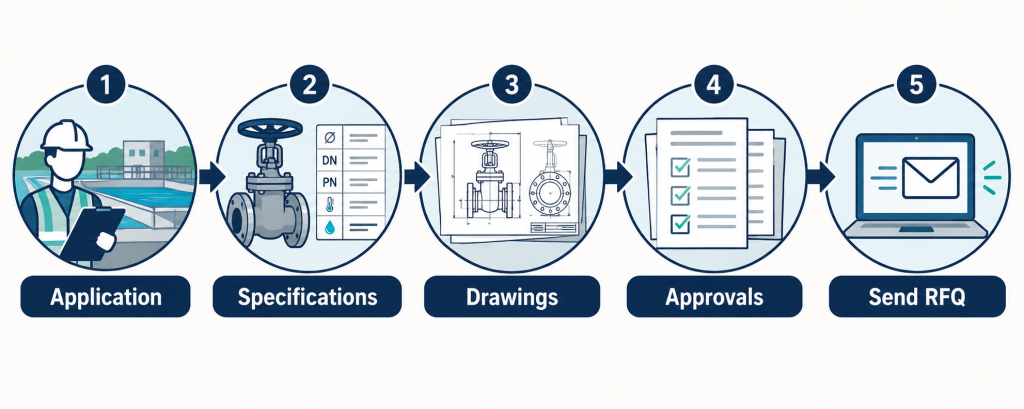
A request for a “3/4-inch valve” alone is not enough to confirm whether the proposed product fits a pipe, water meter or enclosure. The end connections, applicable standard and critical dimensions must be checked against the exact model.
Copyable 18-Field Valve RFQ Checklist
For an initial inquiry, complete fields 1–4, 6–8, 10–12 and 15. The remaining fields are optional at first contact, although they may be needed before a final product selection or quotation.
| No. | First inquiry | Information to provide | Your requirement |
|---|---|---|---|
| 1 | Required | Company and contact person | |
| 2 | Required | Destination country and project location | |
| 3 | Required | Application and installation position, such as meter inlet, meter outlet or distribution line | |
| 4 | Required | Valve function or type: isolation, non-return, balancing, lockable, strainer or other | |
| 5 | Optional | Candidate BMAG Valve model and product-page URL; or an existing valve model, reference drawing or product photo | |
| 6 | Required | Nominal size and critical dimensions or installation clearances | |
| 7 | Required | Connection type and standard on each end, including male/female details where applicable | |
| 8 | Required | Valve-body material or material restrictions; state “no restriction” if appropriate | |
| 9 | Optional | Wetted-part and seal material requirements, if specified by the project | |
| 10 | Required | Fluid and whether this is a drinking-water application | |
| 11 | Required | Normal and maximum operating pressure | |
| 12 | Required | Normal and maximum operating temperature | |
| 13 | Optional | Required flow, allowable pressure drop or Cv/Kv, if relevant | |
| 14 | Optional | Operation or locking method and any key or access requirements | |
| 15 | Required | Required approval, standard or project specification; state “none specified” if applicable | |
| 16 | Optional | Testing, inspection, marking and document requirements | |
| 17 | Optional | Sample quantity, first-order quantity and estimated annual volume, if known | |
| 18 | Optional | Branding, packaging, delivery location and requested project schedule |
For a broader technical reference, the Valve Manufacturers Association’s valve specifying checklist covers service conditions, end connections, materials, testing and documentation. Use your project’s requirements to decide which fields apply.
These fields help the supplier review your request; they do not replace the project engineer’s final specification. Some fields will not apply to every valve. For example, Cv/Kv data may be important for a balancing valve but may not be the first requirement for a simple isolation valve.
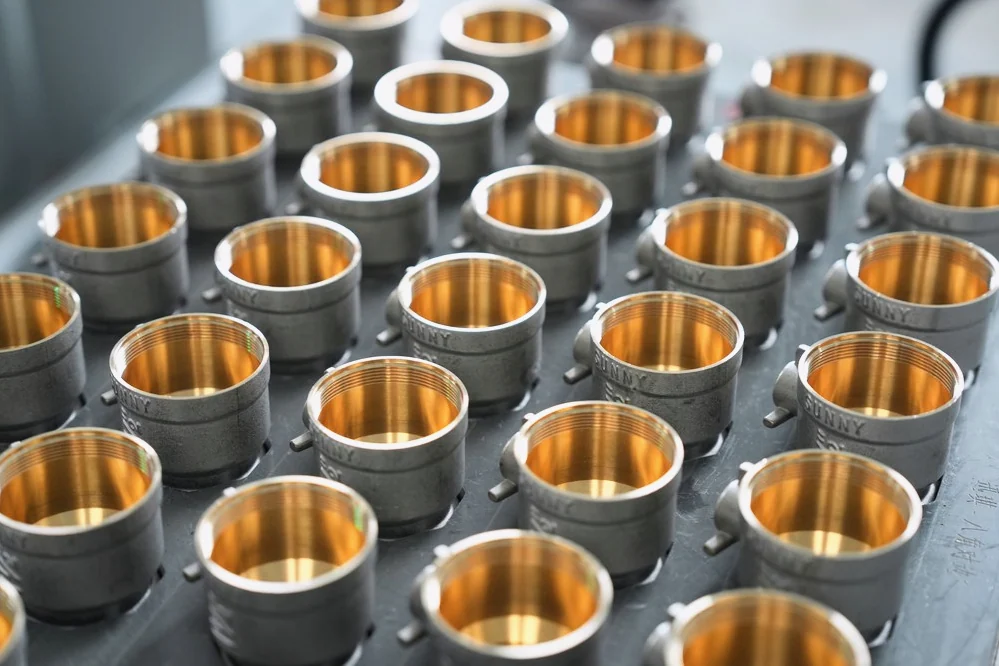
Photos help describe a component or finish. The current drawing and material specification establish the exact requirement.
If you have found a candidate on the BMAG Valve product pages, copy its model name and page URL into field 5. Product photos and a general catalog help identify a candidate, but ask for the current drawing of the exact model and size before confirming fit. If you are replacing an installed valve, attach a photo, drawing or existing part number.
Minimum order quantities differ by product. General production lead time is approximately 30–45 days, subject to the selected product, quantity and order confirmation. Ask the sales team about samples and the applicable MOQ for your request.
Four Gaps That Cause Repeated Technical Questions
1. The size is given, but the mating connection is not
Record the inlet and outlet connections separately. Include the connection standard, size and end style. If the valve must fit an existing meter, pipe assembly or enclosure, provide a dimensioned drawing and any installation clearance limits. A nominal size does not establish every fit dimension.
If you are identifying an existing valve from its body markings, use our guide to understanding valve markings before completing fields 6–7. Confirm the end-connection standard and dimensions separately from a drawing or measurement.
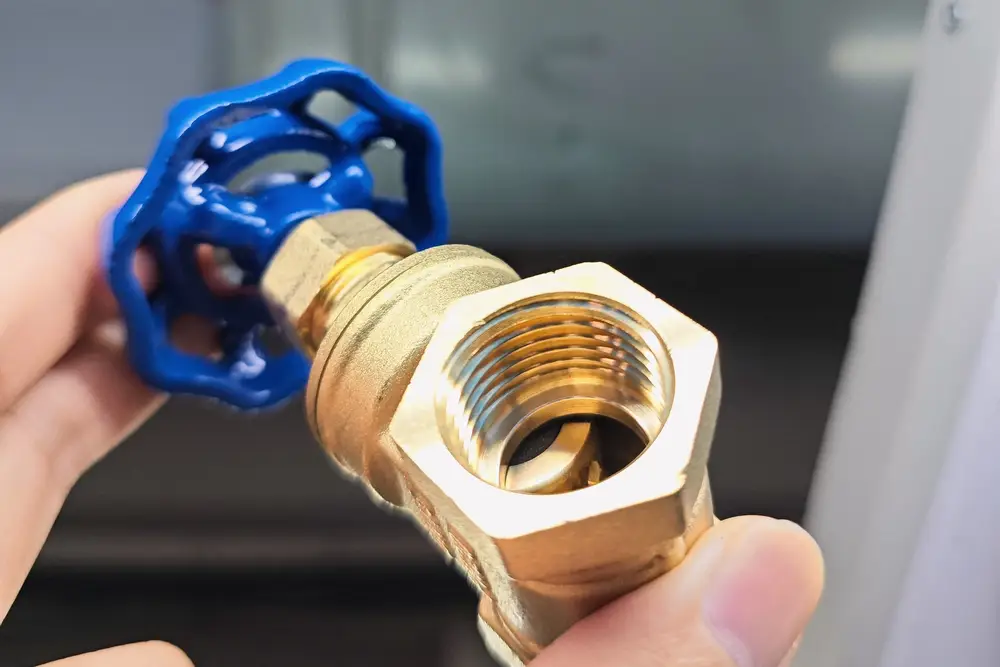
An end-connection photo helps show the style, but it cannot confirm the thread standard or fit without a drawing or measurement.
Name the applicable thread standard in the RFQ. For example, identify ASME B1.20.1 when the project specifies NPT, or ISO 228-1 when it specifies a parallel pipe thread to that standard. Do not assume that ends with the same nominal size will fit each other.
2. An approval is requested without a model or market
Tell the supplier the destination market and the approval or project requirement. Ask which proposed model and size are covered by the current document and whether any conditions apply. Approval for one variant should not be assumed to cover every valve in a product family.
If a particular approval is specified, check the issuing body’s current listing: the WRAS Approvals Directory for a requested WRAS approval, or NSF Certified Products and Systems for a requested NSF certification. A directory link does not establish that every product in a range holds that approval.
For the steps behind a WRAS check, see our guide to verifying a WRAS certificate for valves. Match the listing to the proposed model and size, then record the required approval in field 15.
3. Pressure or temperature is described only as “standard”
Provide normal and maximum operating conditions where known, together with the fluid. The technical team can then check the proposed valve’s documented limits and material suitability. If the system design is still open, mark the value “to be confirmed.”
4. Inspection and project documents are omitted
State whether the project requires a drawing, material evidence, test record, approval document, marking sample or another submittal. If witness inspection is needed, raise it during the RFQ so its scope can be reviewed before quotation.
What Should the Supplier Return?
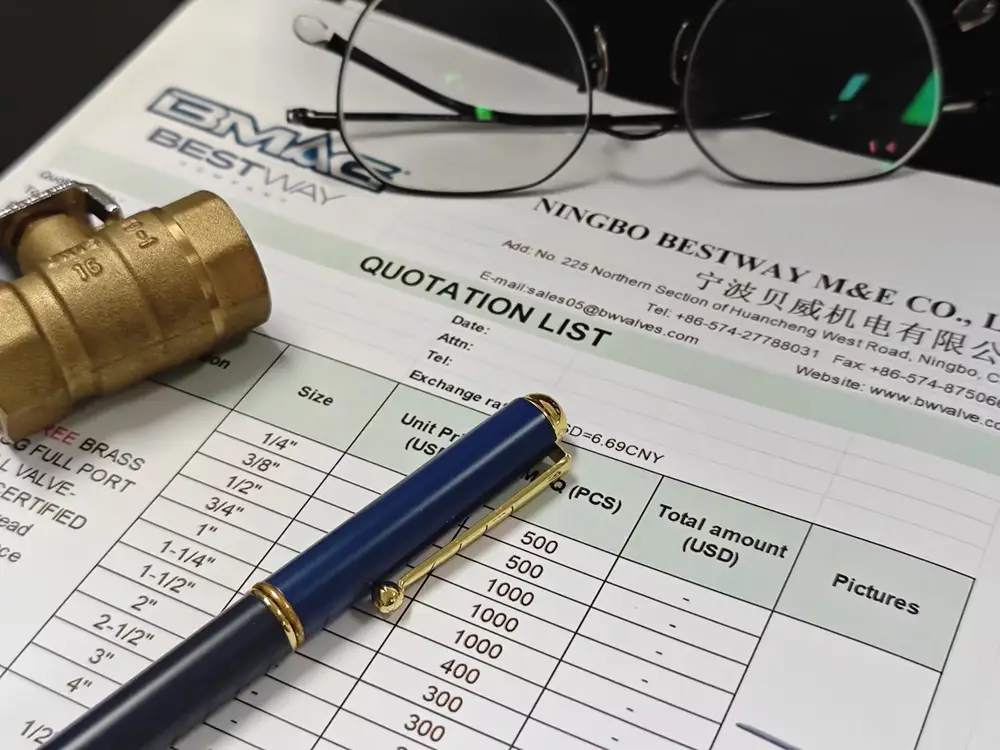
Confirm current prices, quantities and commercial terms in the quotation issued for your project.
A useful supplier response identifies the proposed model and drawing revision, the connection and dimensional match, materials and seals, documented operating limits, requested approval scope, available test documents and any questions still requiring a buyer decision.
| Supplier response item | What to check |
|---|---|
| Proposed product | Exact model, variant and current drawing revision |
| Fit | Connections on both ends, critical dimensions and installation clearance |
| Service conditions | Fluid, pressure and temperature limits in the applicable product document |
| Materials | Body, wetted parts and seals, with supporting records where required |
| Approvals | Document number, holder, covered model and size, limitations and verification date |
| Quality and delivery | Agreed inspection documents, sample plan, packaging and project schedule |
| Open points | Items requiring a drawing, sample, engineering decision or further verification |
Before You Send Your RFQ
Check that the destination market, application, fluid and operating conditions are stated. Attach a drawing or reference part number when the valve must match an existing assembly. Mark unknown values “to be confirmed.” For an application with approval requirements, request current evidence covering the exact proposed model and size.
Ready to discuss your project? Contact BMAG Valve with the completed checklist and any available drawing or sample details. You can attach PDF, JPG or Excel files to the inquiry. The sales and engineering teams can then identify what else is needed for a model-specific response.