

In 2026, wild price swings in the copper market have sent brass valve prices soaring nonstop. Against this backdrop, stainless steel valves have stepped back into the spotlight and emerged as the highly sought-after choice that buyers are scrambling for.
The 2026 Economic Shift: Why Brass Price Soared
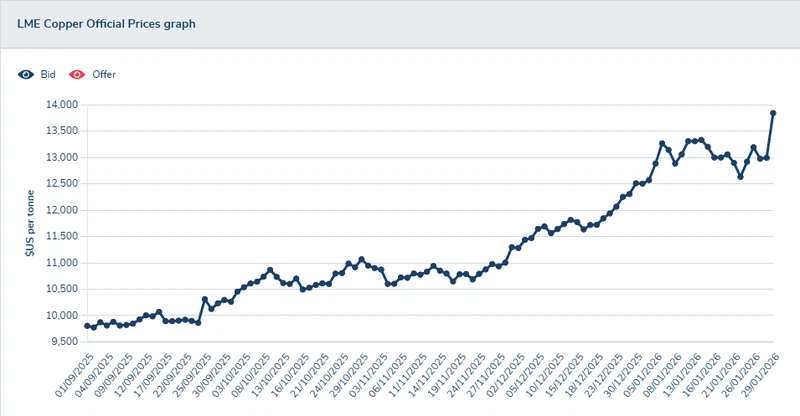
For decades, brass was the king of small-sized valves. It was easy to machine and relatively cheap. However, the current reality of 2026 has flipped that script. Copper prices have surged toward record highs of $12,500 per metric ton, dragging the cost of brass—a copper-zinc alloy—along with it.
The surging demand for AI computing power and the accompanying rise in power consumption have driven up the demand for copper, sending its prices skyrocketing. Compounded by speculative capital activity, this has fuelled a further sharp rise in copper prices. The LME copper price increase has exceeded 30% within four months
When you factor in the stringent “lead-free” regulations for potable water, which require expensive bismuth-based brass alloys, the price of copper has far exceeded that of stainless steel materials; the price gap between brass valves and stainless steel valves has almost entirely evaporated. Today, choosing a 1” stainless steel ball valve over a lead-free brass equivalent often costs within a 10-15% margin, while offering triple the service life.
Materials: The 304 vs. 316 Debate
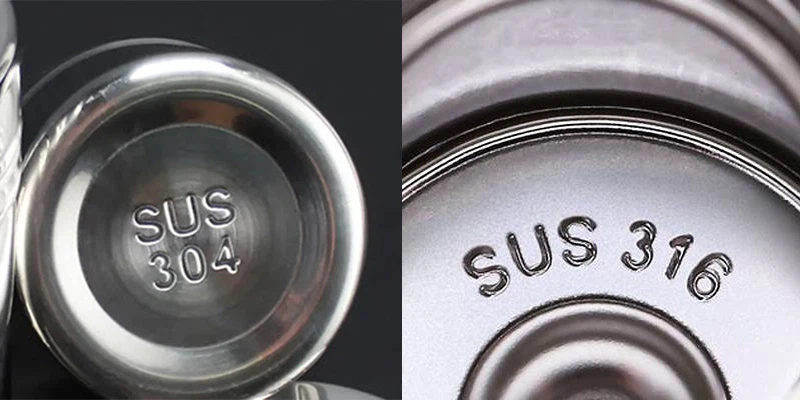
When we talk about stainless steel valves in this size bracket, we are almost always talking about two specific grades:
- Grade 304 Stainless Steel
This is the “standard” grade. It contains chromium and nickel, providing excellent resistance to oxidation and rust. It is the go-to for residential water systems, compressed air, and non-corrosive industrial liquids.
- Pros: Cost-effective, strong, and hygienic.
- Cons: Vulnerable to chlorides (saltwater) and highly acidic environments.
- Grade 316 Stainless Steel
The “professional” grade. It includes 2-3% Molybdenum, which acts like a shield against pitting and crevice corrosion.
- Pros: Superior for marine environments, chemical processing, and pharmaceutical lines.
- Cons: Approximately 20-30% more expensive than 304.
Core Types of Small-Sized Stainless Steel Valves
In the 1/2” to 2” category, the design usually dictates the performance. Here are the most common configurations you’ll encounter:
Stainless Steel Ball Valves
Ball valves are the gold standard for shut-off. They use a rotating hollow ball to control flow.
- 1-Piece: Reduced port (smaller internal hole), non-repairable, but very inexpensive.
- 2-Piece: The industry standard. Full port (the hole matches the pipe size), providing zero flow restriction.
- 3-Piece: The maintenance dream. The center section can be swung out for seal replacement without removing the ends from the pipe.
Gate and Globe Valves
While ball valves are for “on/off” control, Globe valves are designed for adjusting the flow rate. Gate valves are traditional shut-offs used in high-pressure steam or oil systems where a slow opening is required to prevent “water hammer.”
Check Valves
These are the “one-way streets” of the piping world. In sizes like 1/2” to 2”, you’ll mostly see Swing Check or Spring-Loaded Y-Check valves. They prevent backflow, protecting pumps and upstream equipment.
Technical Characteristics and Structure
- Seal Materials: Almost all modern stainless valves in this size range use PTFE (Teflon) or R-PTFE (reinforced Teflon) seats. This allows them to operate in temperatures from -20°C to 180°C (-4°F to 356°F).
- Pressure Ratings: A standard 1” stainless steel ball valve is usually rated for 1000 PSI (WOG). Compare this to a standard brass valve, which often tops out at 400-600 PSI.
Comparative Analysis: Stainless vs. Brass vs. Plastic
To understand why stainless steel valves are dominating, we have to look at the alternatives.
| Feature | Stainless Steel (304/316) | Brass (Lead-Free) | Plastic (PVC/CPVC) |
| Corrosion Resistance | Excellent | Moderate | Excellent (Chemicals) |
| Temp Range | Very High (up to 200°C+) | Moderate (up to 120°C) | Low (max 60°C) |
| Strength/Pressure | Very High (1000+ PSI) | Moderate (400-600 PSI) | Low (150-200 PSI) |
| Durability | 30+ Years | 10-15 Years | 5-10 Years (Brittle) |
| 2026 Price Trend | Stable/Competitive | High (Copper-linked) | Lowest |
| Best Use | Heavy Industrial/Food/Steam | General Plumbing | Irrigation/Pools |
Stainless vs. Brass
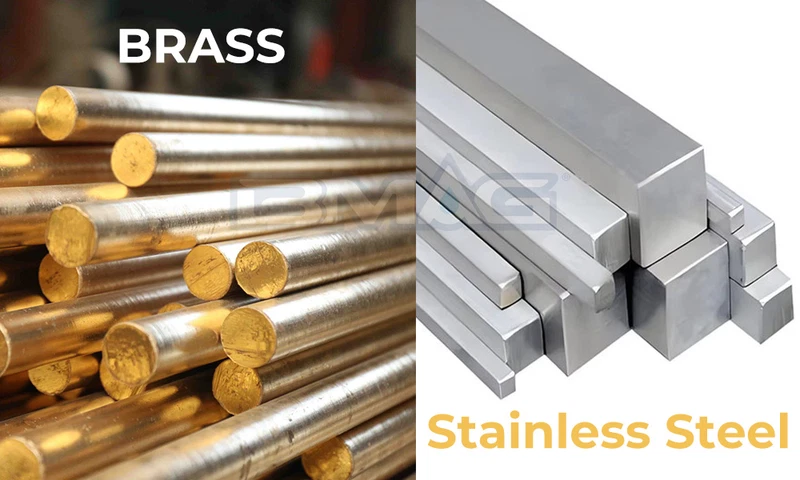
Brass is “soft.” Over time, the threads can gall, and the body can suffer from dezincification. Stainless steel is essentially immune to this. While brass is easier to thread, the 2026 price surge has neutralized its primary advantage: Low processing cost.
Stainless vs. Plastic
Plastic is cheap and immune to many acids. However, plastic valves are the “fragile” members of the family. They generally cannot handle steam, high pressure, or physical impact. Modified nylon material has significantly enhanced the physical properties of plastic valves, enabling them to achieve a pressure rating of PN20. However, it still cannot completely replace metal valves
Applications: Where Stainless Steel Valves Shine
- Food & Beverage: Because stainless steel is non-porous and “clean,” it is the only choice for brewing, dairy, and food processing. It doesn’t leach metallic flavors into the product.
- Chemical & Pharma: Handling aggressive solvents or ultrapure water requires the inert nature of 316L stainless.
- Marine: Saltwater eats brass and aluminum. 316 stainless is the minimum requirement for shipboard plumbing.
- Residential High-End: More homeowners are requesting 1/2” and 3/4” stainless valves for their main water shut-offs to avoid the lead concerns of older brass alloys.
Frequently Asked Questions (FAQ)
Q: Can I mix stainless valves with copper piping?
A: Yes, but be cautious of galvanic corrosion. In a wet environment, direct contact between stainless steel and copper can cause the copper to corrode. Use a dielectric union or a high-quality sealant on the threads to create a barrier.
Q: Is stainless steel harder to install than brass?
A: Slightly. Stainless steel threads are much harder. If you don’t use a high-quality thread sealant (like PTFE tape or specialized pipe dope), the threads can “gall” (lock together permanently). Always use a lubricant-based sealant.
Q: Why does my “stainless” valve have a tiny bit of rust on the outside?
A: This is usually “tea staining” or surface contamination from iron particles in the air or the tools used during installation. It’s rarely structural. A quick wipe with a mild citric acid cleaner usually fixes it.
Q: Are all stainless steel valves lead-free?
A: Yes. Unlike brass, which often uses lead to make the metal easier to machine, stainless steel alloys are naturally lead-free, making them inherently safer for drinking water.


